
The Betta
Eight habits for a healthier, more colorful fish.
Five gallons, minimum
Bowls swing in temperature and toxins. A filtered 5+ gallon tank keeps water stable and gives room to explore.
Keep it 78–80°F
Bettas are tropical. Below 76°F they turn sluggish and prone to illness — use an adjustable heater.
Gentle flow only
Long fins tire easily. A sponge filter or baffled outflow keeps water clean without pushing the fish around.
Leave air at the top
Bettas gulp air with their labyrinth organ. Keep a gap under a secure lid — they can jump.
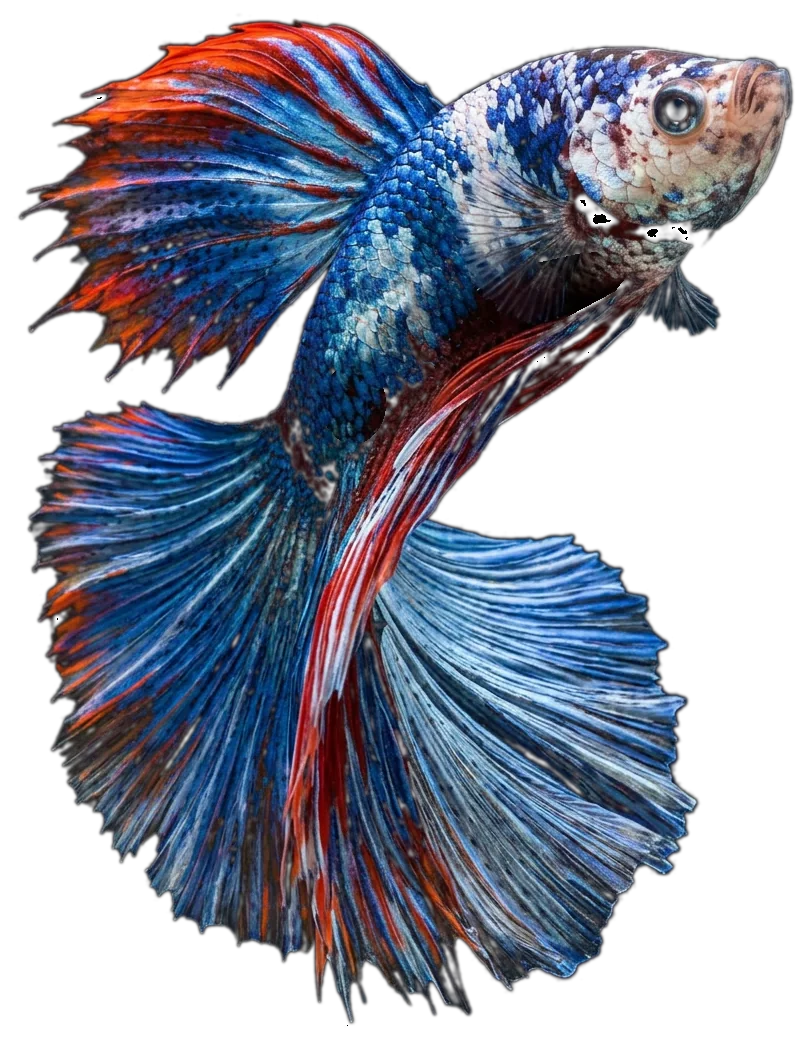
Rest near the surface
Broad leaves like Anubias or a floating betta log give a place to rest close to the air.
Snag-free décor
Skip sharp plastic plants. If decor snags a pair of tights, it will tear delicate fins.
Small meals, one fast day
Two pinches of quality pellets daily, frozen treats occasionally, and one day off a week to prevent bloat.
Weekly partial changes
Swap 20–30% of the water weekly with dechlorinated, temperature-matched water.
Fin types
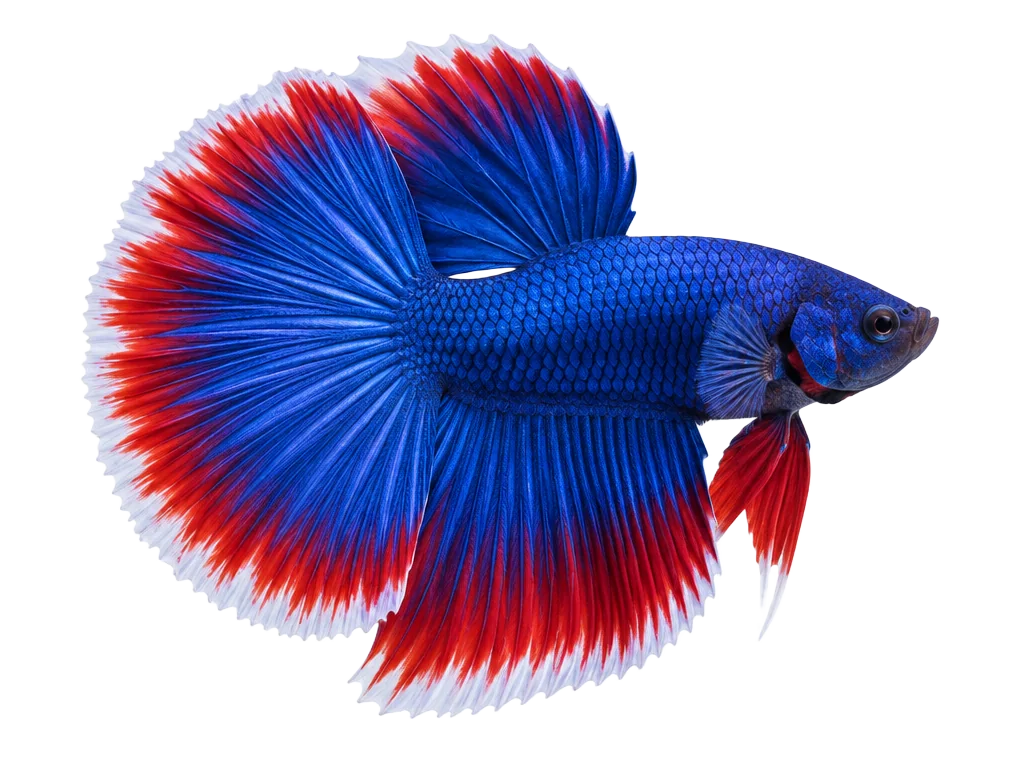
Halfmoon
Tail spreads a full 180°. Needs the calmest water of all.
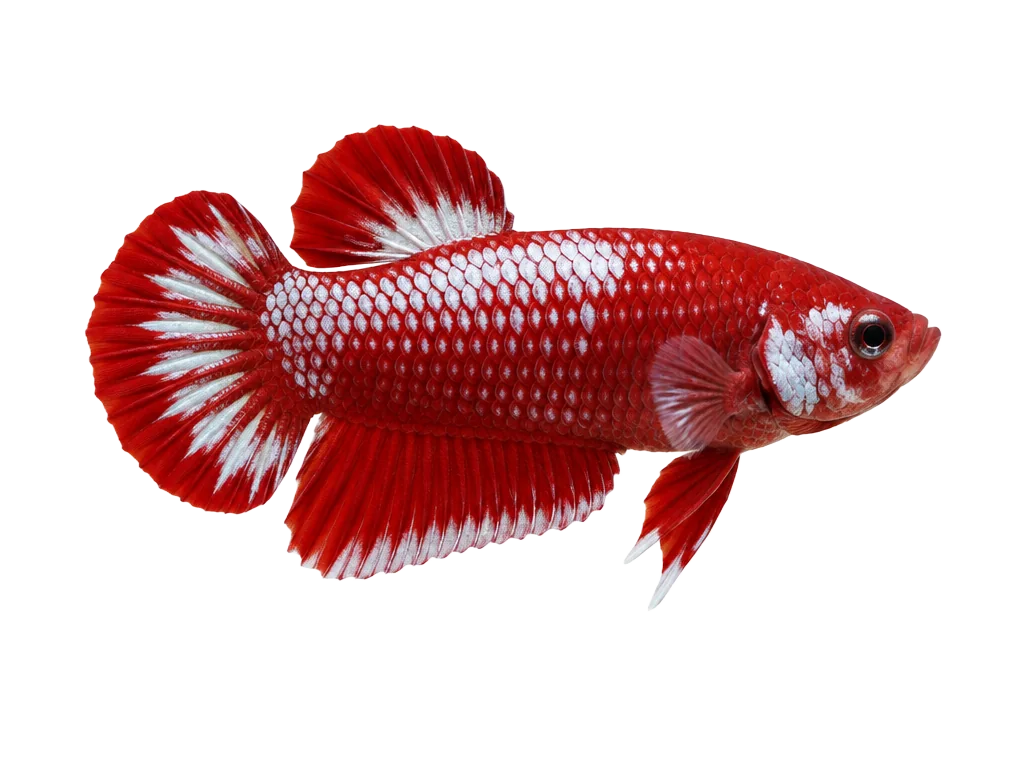
Plakat
Short, sturdy fins. Active swimmers and strong jumpers.
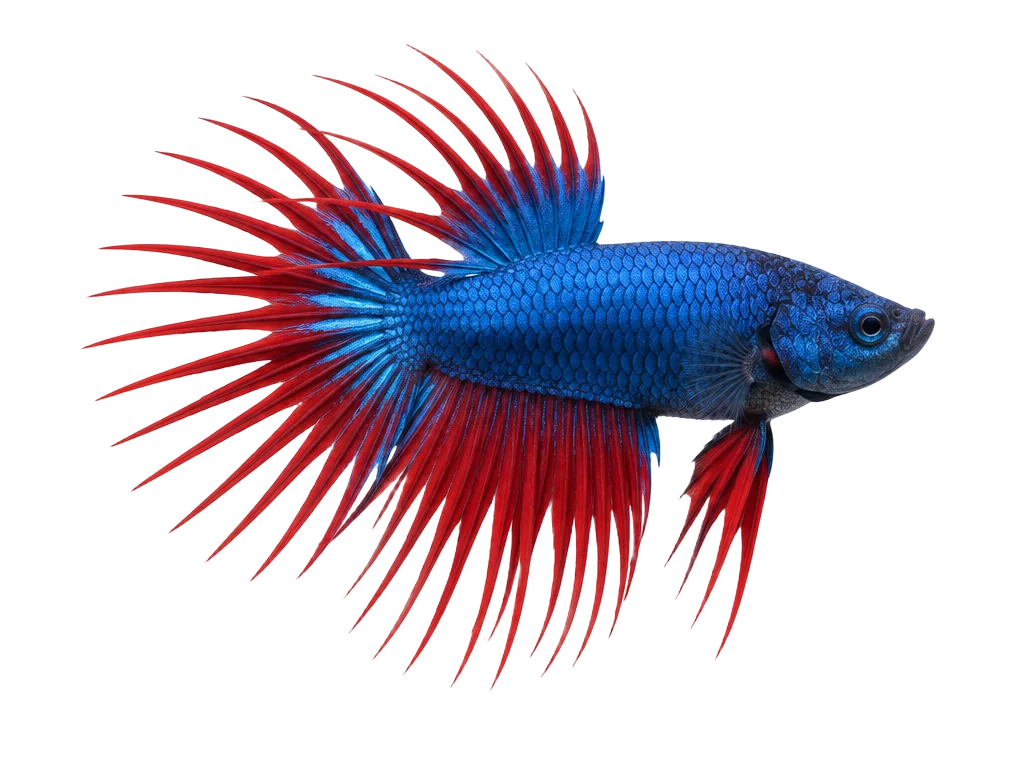
Crowntail
Spiky rays extend past the webbing. Watch for fin damage.
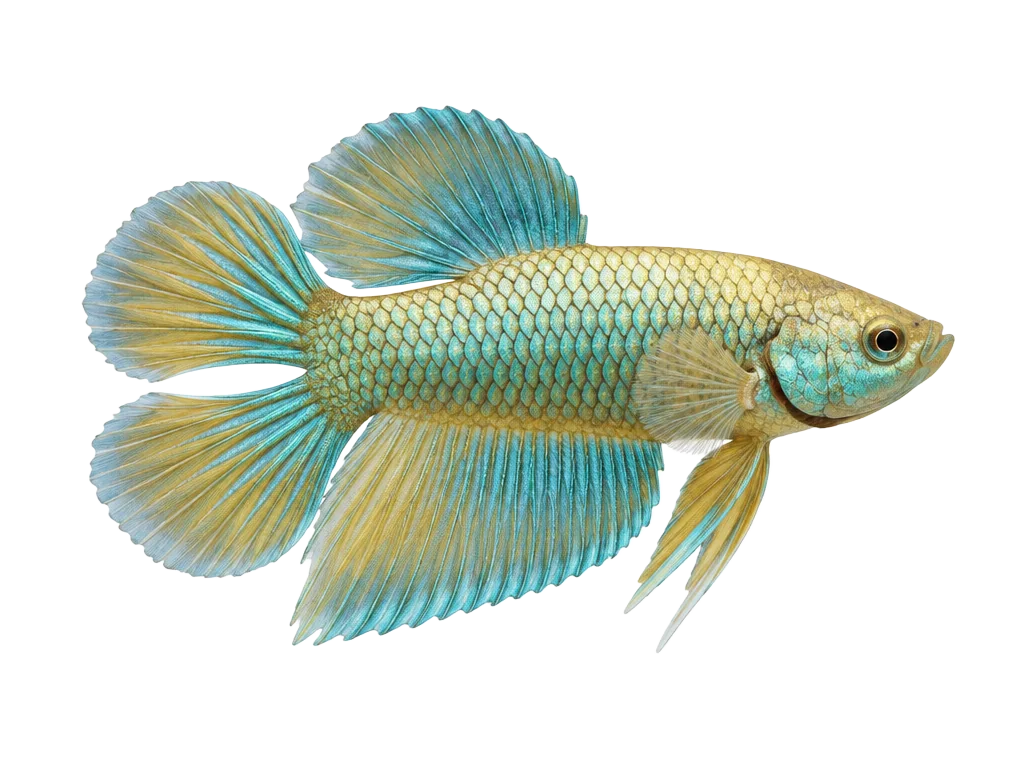
Double Tail
Split caudal fin and a broad dorsal. Often a shorter body.
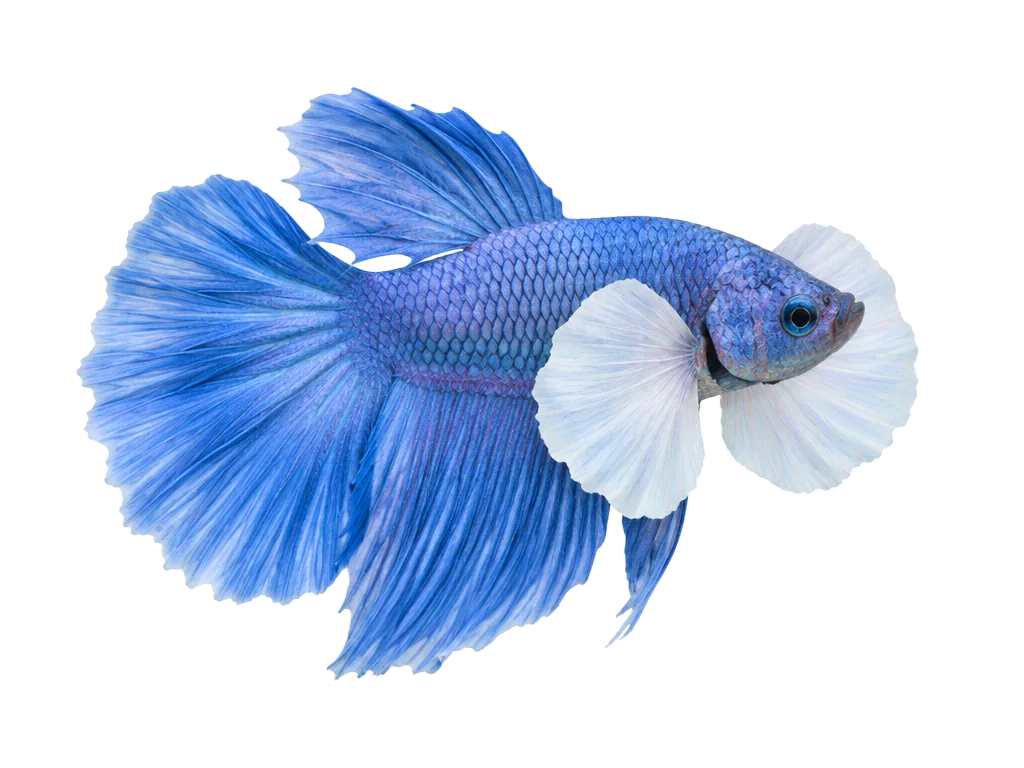
Dumbo / Elephant Ear
Oversized pectoral fins that wave like wings.
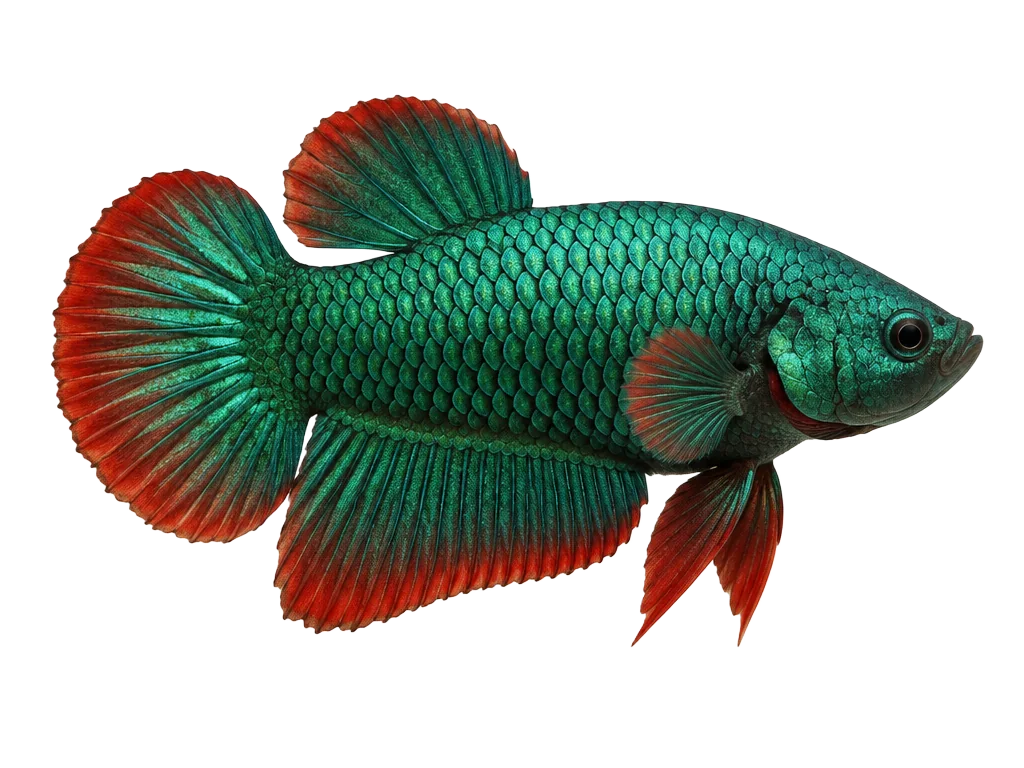
Giant
Up to twice normal size; give them 10 gallons or more.
Tankmates
Usually safe
- Nerite snails
- Mystery snails
- Amano shrimp
- Otocinclus
- Pygmy corydoras
With care (10+ gal)
- Harlequin rasboras
- Ember tetras
- Kuhli loaches
- Cherry shrimp (may be eaten)
Avoid
- Another male betta
- Gouramis
- Tiger barbs & fin nippers
- Fancy guppies
Every betta has its own temperament — keep a backup plan if one turns aggressive.
Ideal parameters
- Temperature
- 78–80°F
- pH
- 6.5–7.5
- Hardness (GH)
- 3–10 dGH
- Ammonia / Nitrite
- 0 ppm
- Nitrate
- Under 20 ppm
Bring a water sample in and we'll test it for you.
Common ailments
Fin rot
Signs: Ragged, darkening fin edges.
What to do: Clean warm water first; ask staff before medicating.
Bloat & constipation
Signs: Swollen belly, floating trouble.
What to do: Fast 1–2 days, then feed smaller portions.
Velvet
Signs: Gold dusty sheen, clamped fins.
What to do: Dim the lights and bring a water sample in.
Stress stripes
Signs: Dull color, horizontal bands.
What to do: Check heat, flow and tankmates.
Small tanks, big worlds
Solo showcase
One betta or a small shrimp colony. Little room for error, so keep stocking light.
- · Sponge filter
- · Adjustable mini heater
- · Low-profile LED
Planted desktop
The sweet spot for a lush scape: a betta plus snails or shrimp.
- · Baffled or sponge filtration
- · Dimmable light on a timer
- · Fine substrate for plants
Nano community
Room for a peaceful micro-school that actually behaves like a school.
- · Gentle hang-on-back or nano canister
- · Reliable heater
- · Lid against jumpers
Nano livestock
Chili Rasbora
10 gal+Tiny red schooling fish; keep groups of 8 or more.
Celestial Pearl Danio
10 gal+Spotted and shy; thrives with dense plants.
Ember Tetra
10 gal+Warm orange glow, calm temperament.
Pygmy Corydoras
10 gal+Mid-water dwarf catfish; soft sand and a group.
Neocaridina Shrimp
5 gal+Colorful grazers; a betta may hunt the babies.
Nerite Snail
3 gal+Algae eater that won't overrun freshwater tanks.
Scarlet Badis
5 gal+Jewel-like micro predator; needs live or frozen foods.
Dwarf Pea Puffer
5 gal+Species-only tank — they nip fins, including a betta's.
Plants scaled for small tanks
Small-volume stability
- · Small water volumes swing in temperature and chemistry fast — test weekly.
- · Top off evaporation with RO or distilled water so minerals don't build up.
- · Change 15–20% of the water weekly with conditioned tap water.
- · Feed sparingly: one missed pellet matters more in five gallons than fifty.
- · Add livestock slowly and let the tank cycle fully first.